


Red Light Therapy for Fertility. An overview of LED vs. Laser and What Actually Matters

What Is Photobiomodulation?
Photobiomodulation (PBM) is the scientific term for using light to stimulate cellular function. You'll also hear it called red light therapy, red light laser therapy, low-level laser therapy (LLLT), or cold laser therapy. They're all referring to the same principle: using specific wavelengths of light to boost cellular energy production.
Think of it as photosynthesis for your cells. When red light (630-680nm) or near-infrared light (810-850nm) penetrates your skin, it's absorbed by the mitochondria inside your cells. These mitochondria act as cellular power plants, and the light gives them a boost, increasing ATP production.
More cellular energy means your body can function at its best. For fertility specifically, this translates to:
- Improved blood flow through increased nitric oxide production, delivering more oxygen and nutrients to reproductive organs
- Reduced oxidative stress that can damage egg and sperm DNA
- Enhanced tissue repair and regeneration in the reproductive system
- Optimised cellular communication between the developing embryo and uterine lining
- Better hormonal balance through improved ovarian and testicular function
Why This Matters for Fertility
Egg cells contain up to 600,000 mitochondria each, more than virtually any other cell in the human body. They need this enormous amount of energy to mature properly, support fertilisation, and develop into a healthy embryo. Sperm cells rely on mitochondrial function for motility and DNA integrity.
When these cells have access to more energy, they simply work better. Studies have shown that women undergoing IVF with better mitochondrial function in their eggs have higher rates of successful embryo development and pregnancy. Similarly, men with higher sperm mitochondrial activity show better fertility outcomes.
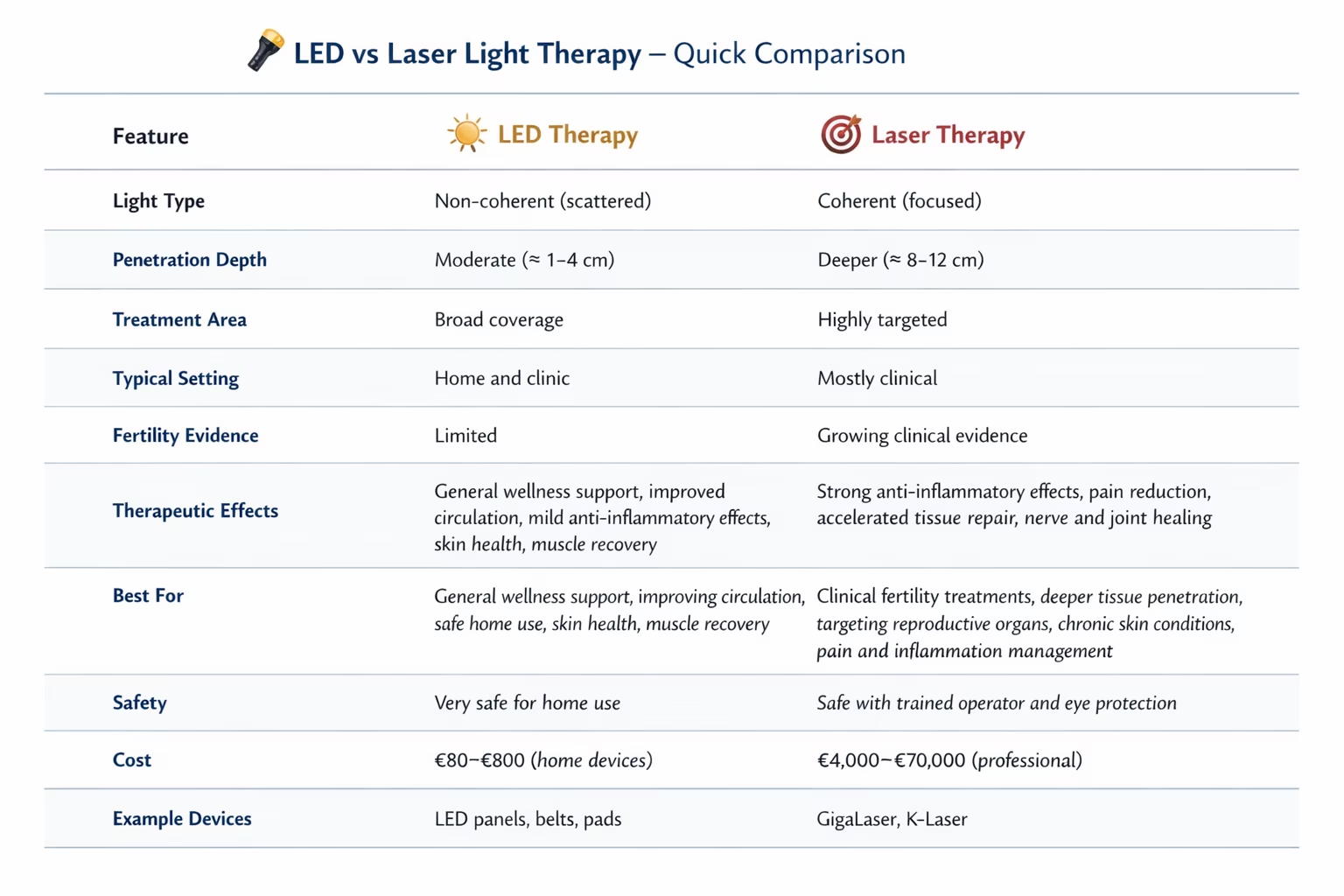
LED vs. Laser: What's the Difference?
Both use photobiomodulation, but they deliver light in fundamentally different ways.
LED (Light-Emitting Diode)
LED devices emit non-coherent light. The waves scatter in multiple directions. This makes LEDs excellent for treating larger surface areas. Modern panels can reach 300 watts, but that power is distributed broadly rather than focused.
Best for: General wellness support, improving circulation, home use, skin health, muscle recovery
Laser Diodes
Laser devices emit coherent, focused light at specific wavelengths. The waves travel in sync, allowing precise targeting and deeper tissue penetration. Medical-grade lasers like the GigaLaser (used in Danish fertility protocols) deliver 20,000 Joules per session directly to the abdominal area. Class 4 lasers like the K-Laser offer even higher power outputs while remaining non-thermal, enabling deeper penetration and shorter treatment times.
Best for deeper tissue penetration, inflammation, celluar energy targeting reproductive organs, chronic skin conditions, pain management.
What Does the Research Show?
Here's the critical detail often glossed over: virtually all fertility studies used medical-grade lasers, not LED devices.
Key studies:
- Ohshiro (2012): 701 Japanese women with severe infertility achieved a 22.3% pregnancy rate with 79 live births using 830nm laser therapy over treatment periods spanning three to four months.
- Grinsted et al. (2019): 65% of 400 infertile women aged 34-45 conceived following laser PBM treatments in Denmark and Norway. The protocol involved consistent treatments over 12-16 weeks.
- Phypers et al. (2024): Demonstrated successful outcomes using LED, laser, or combinations, showing technology type isn't the only factor. The research team at Laser Medicine Centre in London used both Class 3b and Class 4 therapeutic lasers, including the K-Laser, alongside LED devices in their protocols.
Danish physiotherapist Anne Marie Jensen has documented high success in conjunction with IVF. She combines the GigaLaser with physical therapy techniques like the Mojzisova Method, addressing scar tissue, pelvic inflammation, and overall reproductive health. Her clinical experience shows that consistent treatment over three to four months is essential for optimal results. But everyone is unique.
5 minutes to spare? This video gives fantastic overview of Red Light Laser Therapy and Photobiomodulation.

Making Your Choice
If you're considering light therapy for fertility, here's what matters:
- Wavelength: Near-infrared (810-850nm) for deeper tissues; red (630-680nm) for circulation and hormonal balance
- Device quality: Many consumer LEDs are underpowered. Look for medical-grade or FDA-cleared devices with verified power output. Power density matters as much as wavelength. A device might have the right wavelength, but if it can't deliver enough power to penetrate tissue, it won't help with deep fertility concerns.
- Consistency: Expect around 6 treatments monthly for 3-4 months. Anne Marie Jensen typically recommends around 18-24 sessions aligned with the menstrual cycle. This isn't a quick fix. The studies showing positive results all involved consistent protocols over extended periods.
- Context: PBM works best alongside nutrition, stress management, and addressing underlying hormonal imbalances. Working with a specialist fertility doctor can help with understanding your body and creating a tailored plan. If you’re based in Ireland, Saol Nua focus on getting to the route cause. They specialise in fertility and hormonal health.
Final Thoughts
Laser therapy offers the strongest research support for severe fertility challenges and deep tissue treatment. If you're facing longstanding infertility or failed IVF cycles, a clinic offering evidence-based laser protocols is worth exploring.
LED devices provide a more accessible option for general wellness, skin health, improving blood circulation, and supporting cellular health.
Photobiomodulation is exciting, genuinely shows promise and it works best as part of a comprehensive approach.
Your fertility journey is unique. The technology that supports it should be chosen thoughtfully, with realistic expectations and solid evidence guiding your decisions.
References
- Aspen Live Well - The Science of Photobiomodulation Therapy (Laser Therapy)
- Phypers R, et al. The Efficacy of Multiwavelength Red and Near-Infrared Transdermal Photobiomodulation Light Therapy in Enhancing Female Fertility Outcomes. Journal of Clinical Medicine. 2024;13(23):7101. https://pubmed.ncbi.nlm.nih.gov/39685560/
- Ohshiro T. Personal Overview of the Application of LLLT in Severely Infertile Japanese Females. Laser Therapy. 2012. https://pmc.ncbi.nlm.nih.gov/articles/PMC3944482 /
- Grinsted A, Grinsted Hillegass M. PhotoBioModulation for Infertility. EC Gynaecology. 2019;8(9):875-879.
- Anders JA, et al. Photobiomodulation: Lasers vs Light Emitting Diodes? Photomedicine and Laser Surgery. 2018. https://pmc.ncbi.nlm.nih.gov/articles/PMC6091542/
- Lanzafame RJ. Light Dosing and Tissue Penetration: It Is Complicated. Photobiomodulation, Photomedicine, and Laser Surgery. 2020. https://pmc.ncbi.nlm.nih.gov/articles/PMC7374595/
- Donegan T. Giga Laser and Fertility - European Results. Tracy Donegan Blog. 2024. https://blog.tracydonegan.org/blog/giga-laser-for-fertility
- Laser Medicine Centre, London. Best Light for Fertility - Red and Infrared Light Therapy. https://www.lasermedicine.co.uk/best-light-for-fertility/